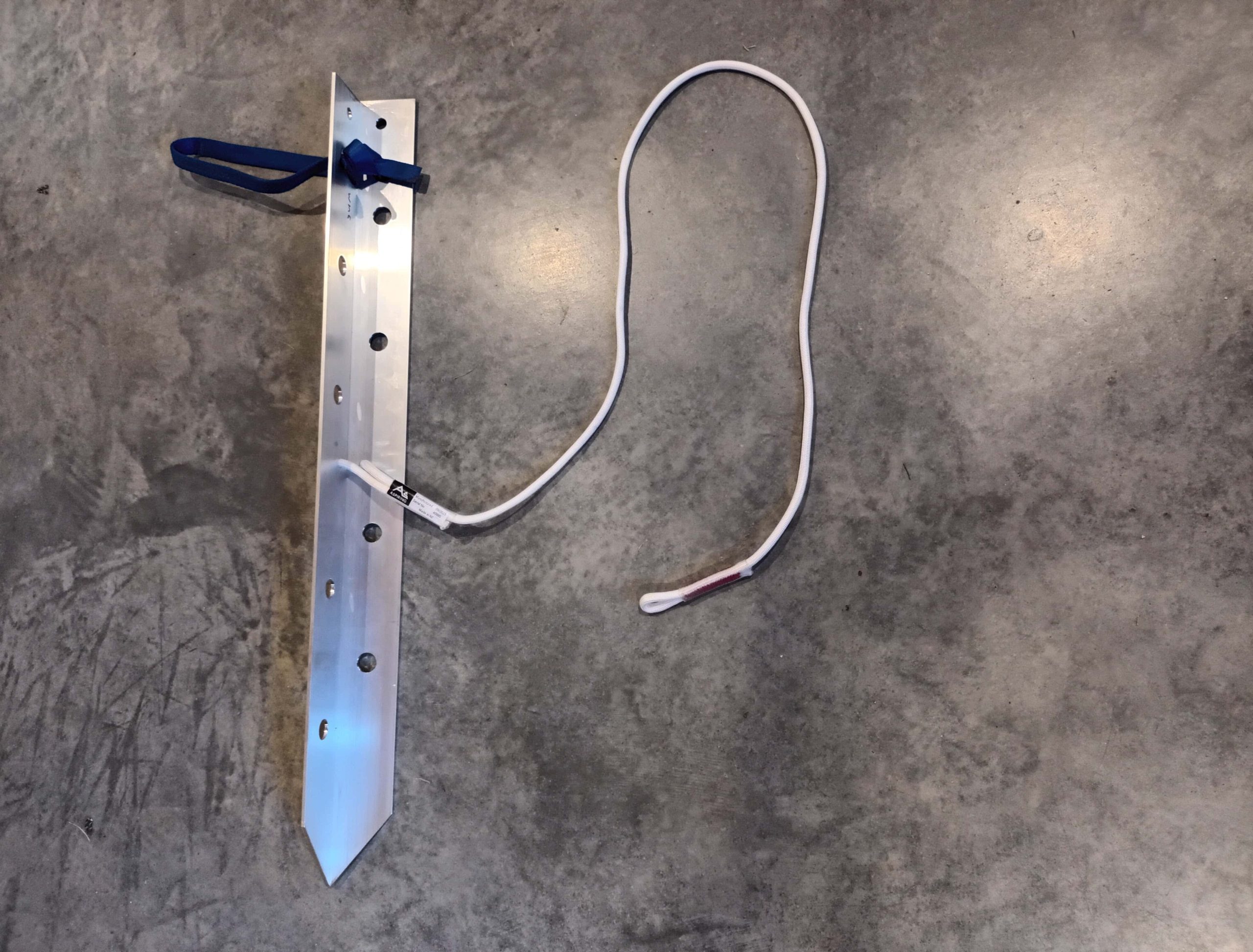
Vertical Mid-clip Snowstakes
Snow Anchors
Unlike rock protection, the strength of snow can vary to a large degree and can change on an hourly and daily basis. Snow can be hard, almost ice, through to soft cold powder or warm wet snow. The only way to develop an awareness of snow anchor strength is to practice building and testing them in different snow conditions over and over again. Any snow anchor relies on experience and judgement. As they are often used singularly, when they fail, they do so catastrophically. If in any doubt, it is possible to combine multiple anchors to ensure the anchor system is fit for purpose.’
In firm snow conditions, or when the snow is moist and can be compressed harder, the strongest possible use of a snowstake is the vertical mid-clip orientation. This requires a sling or cable attachment to the middle of the stake.
Placing Snowstakes
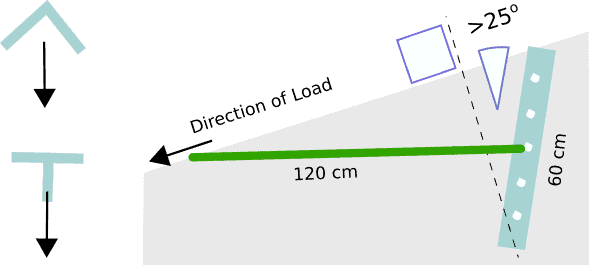
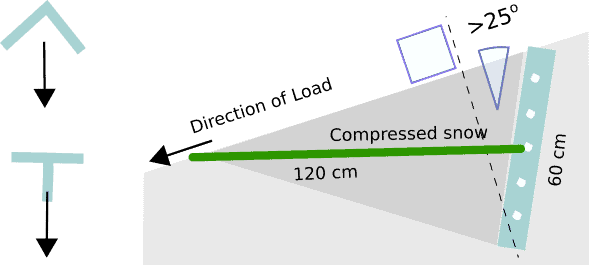
For a vertical mid-clip, the stake should be placed at least 25o back from perpendicular to the surface (aiming for 30o gives a small margin).
For a V-section snowstake, the open part of the V points in the direction of load. For a T-section snowstake, the web of the ‘T’ points in the direction of the anticipated load.
The channel for the attachment should be cut as narrow as possible with an ice axe pick or a snow saw, and deep enough so the attachement doesn’t inadvertently pull upwards on the stake. Also try not to disrupt the snow in front of the stake unless the snow in front of the stake can be compacted to increase strength.
Importantly, the research from Don Bogie suggests that a vertical mid-clip gives more certainty of a strong anchor than a top clip does. Even if 10 cm or so of a mid-clip stake is left sticking out of the snow it still gives a far stronger anchor than a top-clip in the same snow.
When the snow is moist and compressible or can be squeezed into a snowball, the stake should be placed and the snow compacted under the attachment. The hole can then be backfilled with more snow and compressed again. Hands work best for a more even compaction.
The wire cable, Dyneema chord, and double-length slings are 120cm long, twice the length of a typical snow stake. This is useful because if the top of the snow stake and the end of the wire/sling is flush with the surface of the snow and the wire/sling is not kinked, the vertical mid-clip snowstake will be positioned at the correct angle back from perpendicular.
For all snowstake anchors, test them before relying on them. The best method is putting the shaft of an ice axe through the focal point and giving a sharp tug on the attachment. For low-stretch attachments such as steel cables or Dyneema, this will put a high force on the stake, make sure it is well seated, and give a good indication of it’s strength.
References
Snow Anchors for Belaying and Rescue, Don Bogie 2010
What Everyone Wants to Know About Snow Anchors, Aspiring Safety 2021