Avalanche Skills for Mountaineers
Vulnerability of mountaineers
There are a number of practical reasons why mountaineers may be overrepresented in the New Zealand statistics. It is possible to explore these reasons and an awareness allows mountaineers to build them into their risk management and decision-making.
Avalanche terrain
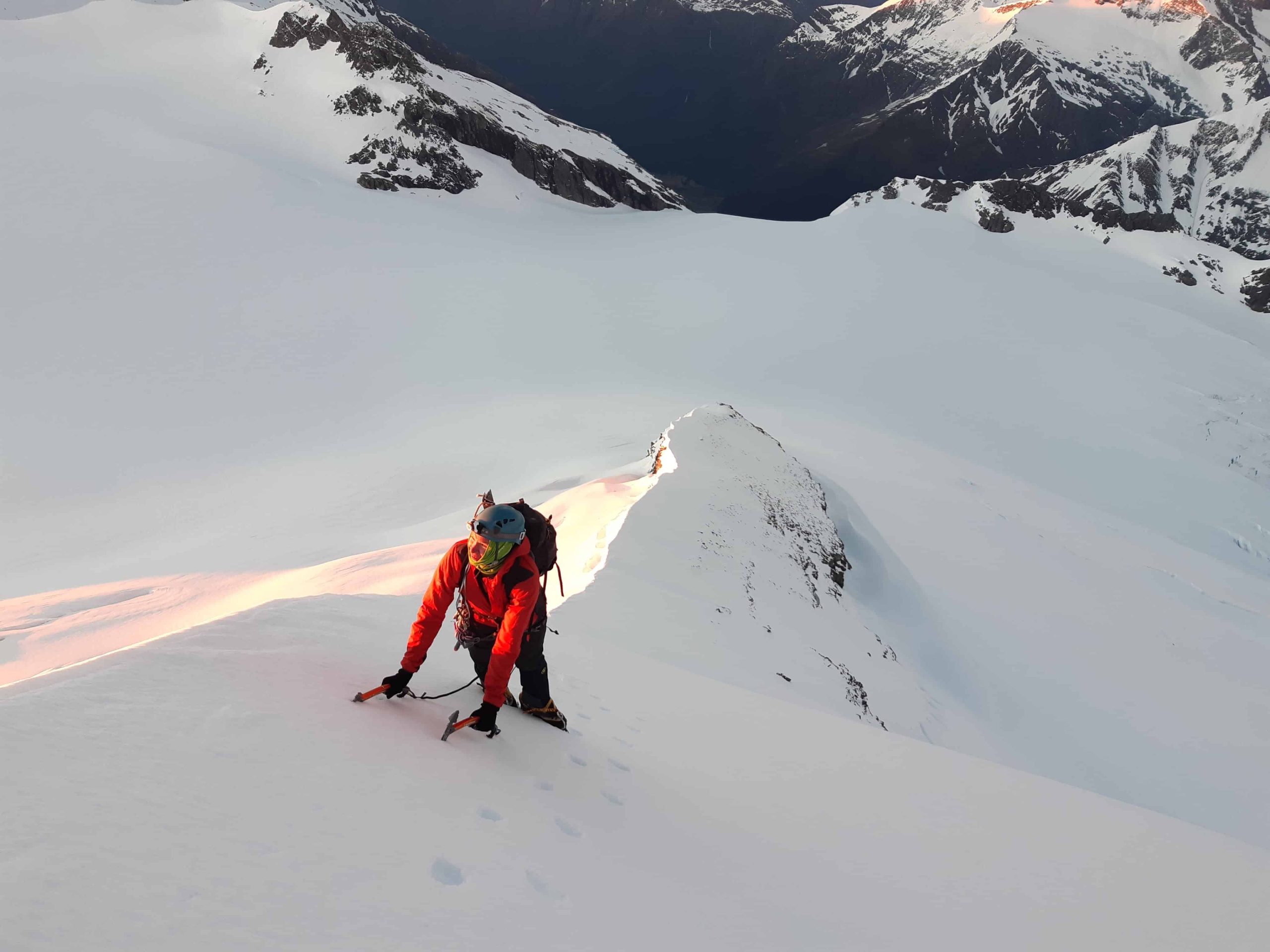
A characteristic of avalanche terrain is that it has a slope angle between 30 and 45 degrees or is in the path and threatened by such terrain above. A lot of climbing and climbing approaches fall within this range. This suggests that mountaineers can spend more time exposed than ski or splitboard tourers. When the avalanche danger is elevated, tourers can still have a good day out by sticking to low angle terrain but climbers do not always have this benefit if focused on a particular objective. Despite the attraction of steep skiing and riding, this is only likely to be carried out by a minority of backcountry travellers at times when conditions are very favourable.
Also relating to terrain, climbers can often seek shelter from the wind on lee sides of ridges and therefore expose themselves to areas of wind-deposited snow.

Exposure
It it possible to spend a lot of time backcountry skiing or splitboard without entering avalanche terrain, however for mountaineers, low angle terrain is not climbing so climbers can often find themselves spending more time exposed to the avalanche hazard.
Terrain traps
Mountaineering terrain is characteristically exposed to terrain traps. Mountaineers are frequently travelling in terrain where any fall is not survivable. These increase the consequence of even small avalanches such as narrow gullies, cliffs, crevasses, etc. In almost all reported avalanche fatalities over the last 20 years in New Zealand, trauma has been the main cause of death rather than burial asphyxia. Small avalanches can be encountered even when the avalanche danger is ‘Low’ and so can catch climbers out. These small avalanche are often new snow or surface problems such as Loose Wet or Windslabs which can be easy to observe and predict.
Mobility
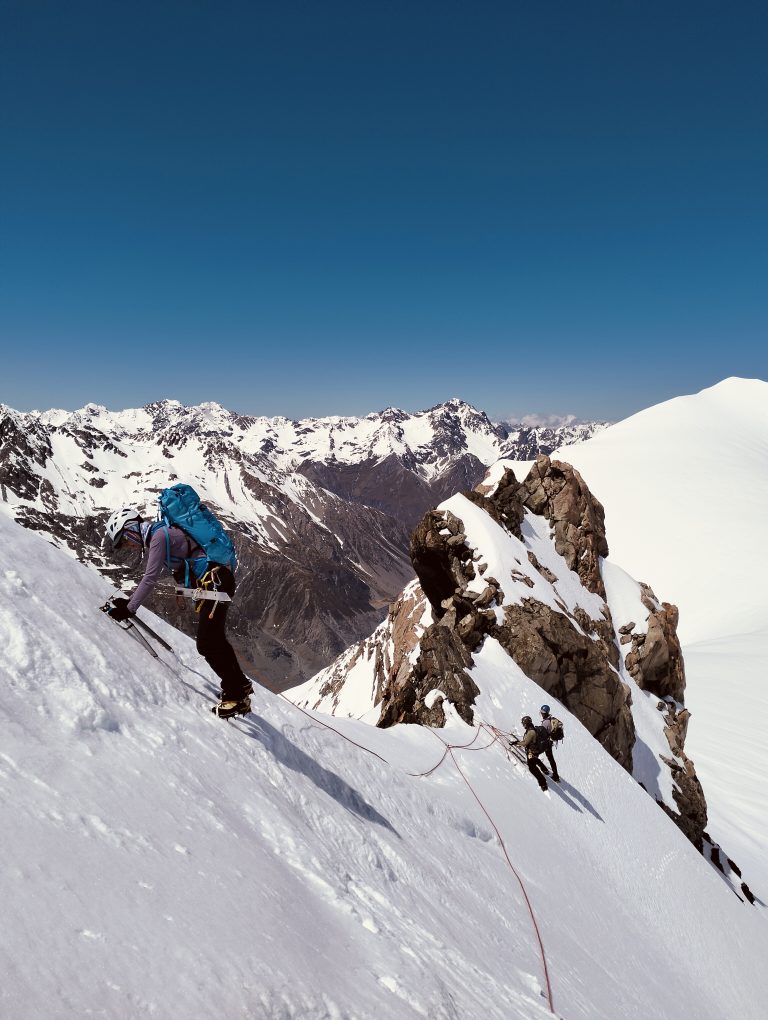
Practically mountaineers moving on foot are much less mobile than skiers and riders. They may also be roped up which further limits the ability to move quickly through threatened areas or out of the way of triggered avalanches. Coupled with terrain traps, this reiterates that even the smallest of avalanches can have serious outcomes for climbers.
Proximity
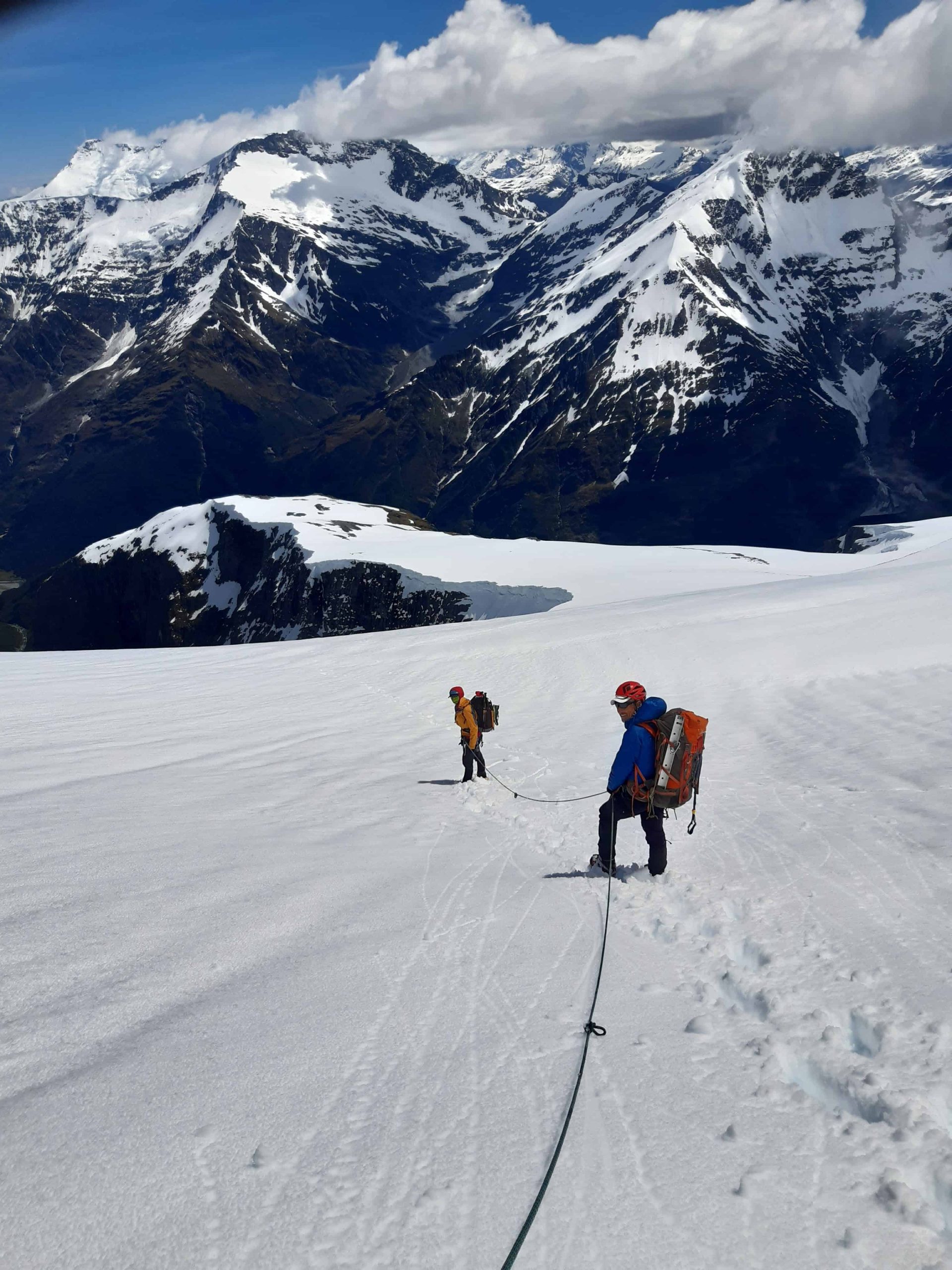
A fundamental lesson of avalanche skills courses is to spread out when travelling in avalanche terrain. This is to minimise exposure to avalanche hazards and, in the event of an avalanche, to ensure more rescuers are available. Mountaineers may be roped up to manage a crevasse or a fall hazard and as a result, travelling close together. Mountaineers must therefore be very aware that they are often managing multiple simultaneous hazards and may need to correctly identify the most significant risk at any particular time and choose the most appropriate control method.
Equipment
Mountaineering equipment, such as ropes connecting members of the party together and ice tools connected by umbilical leashes, will have anchoring properties that can pull them deeper into an avalanche burial. In addition, being attached to items such as crampons and ice axes can increase the potential trauma in the event of an avalanche. Snow anchors will not be strong enough to secure the mass of snow released in even a small avalanche.
Weather windows
As the conditions in the mountains are changing, the climbing season for classic snow and ice routes has moved earlier in the year. This can coincide with unsettled spring weather patterns. Weather windows may be short and pressures climbers to venture out immediately after a storm.
Strategies for mountaineers
Trip planning
Surface or new snow avalanche problems will stabilise quickly during the warmer summer months. Rules of thumb such as avoiding avalanche terrain for 24 to 48 hours and dramatically reducing exposure to avalanche hazard. It is also important to be aware that unusual weather events at any time of year will result in unusual avalanche conditions.
In all forms of backcountry travel good preparation habits include forming a picture of what conditions to expect, what information to target to confirm or challenge this picture and where would be good points to gather this information and plan routes accordingly. When interpreting the avalanche forecast think about what conditions you are expecting and how it will feel. If you expect the danger to be low but you find yourself stepping into knee-deep snow or punching through a crust, it might be time to slow down and assess. If you are expecting new snow and you encounter a slick old snow surface, think about when the new snow has been moved to as it likely has.
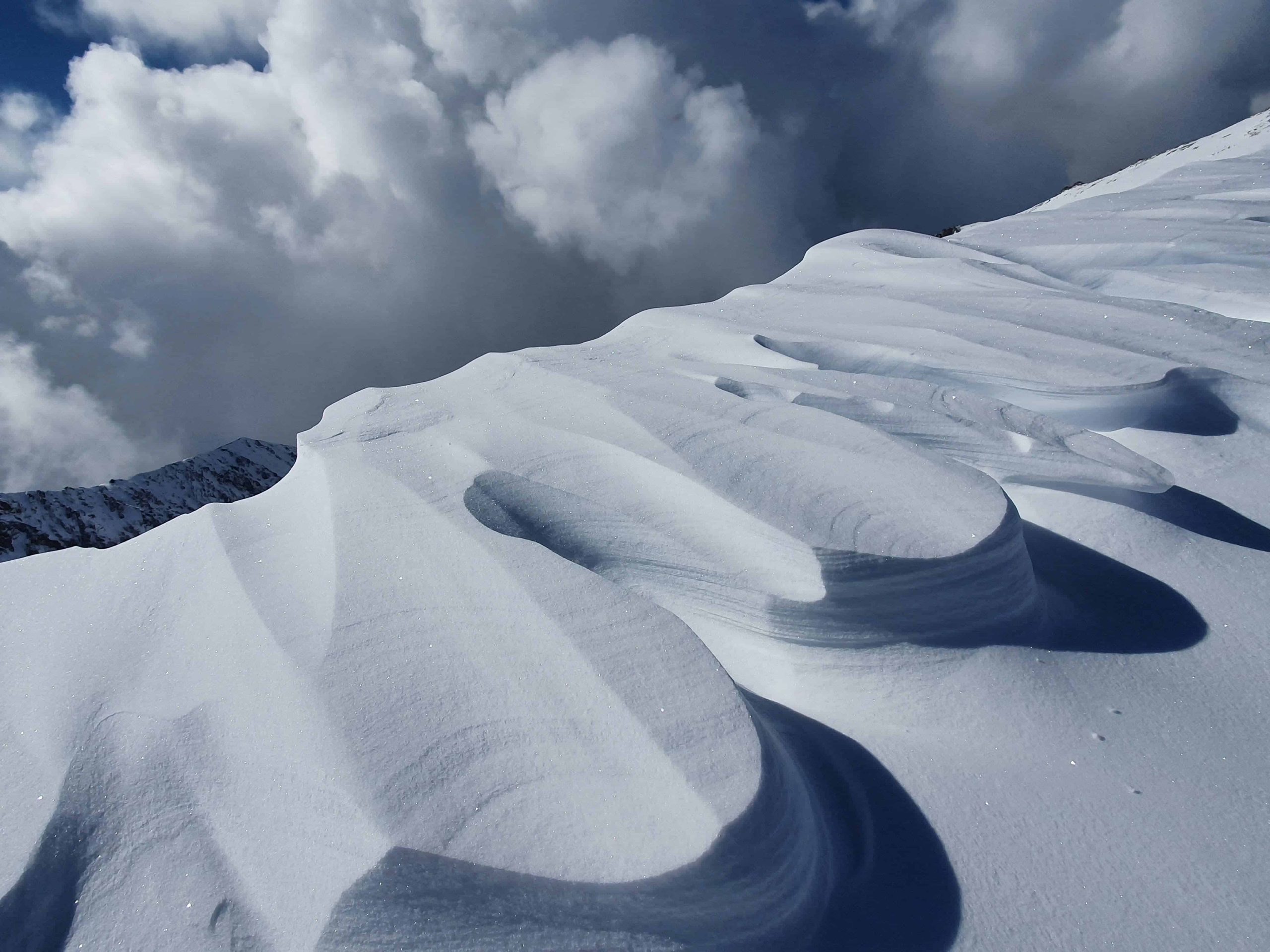
Monitoring signs of avalanche conditions
As with all backcountry travelers, mountaineers should pay close attention to any recent avalanches, their location and character. Identifying signs of instability – cracking, or rollerballering
Pay close attention to the snow surface conditions as this will provide some information on the snowpack and it’s history. This means whether the surface is scoured, sun affected or smooth, drum-y windslab.
Monitoring snowpack structure
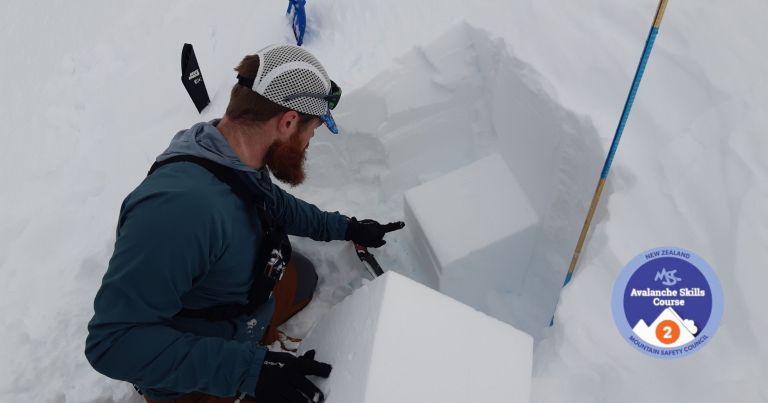
Mountaineers should have the advantage over ski and snowboarders in that they are moving more slowly and even plugging their way through the snow. It is much easier to gather information on the snowpack layering and snow surface conditions. In particular being aware of cohesive slab over weather layers or ‘upside down’ snowpack. Crusts Layering Lemons such as changes in density, thin weak layers, weak grains, changes in grain size, or moisture content
Monitoring weather
As mountaineers are commonly exposed to new snow or surface avalanche problems, a good understanding of the past 24-48 hours of weather and the weather forecast will give good indications of the location and extent of any avalanche problems. This includes: loading from any rain or new snow, loading from wind, taking into account wind strength and direction and any signs of rapid warming through air temperature, rain or sun.
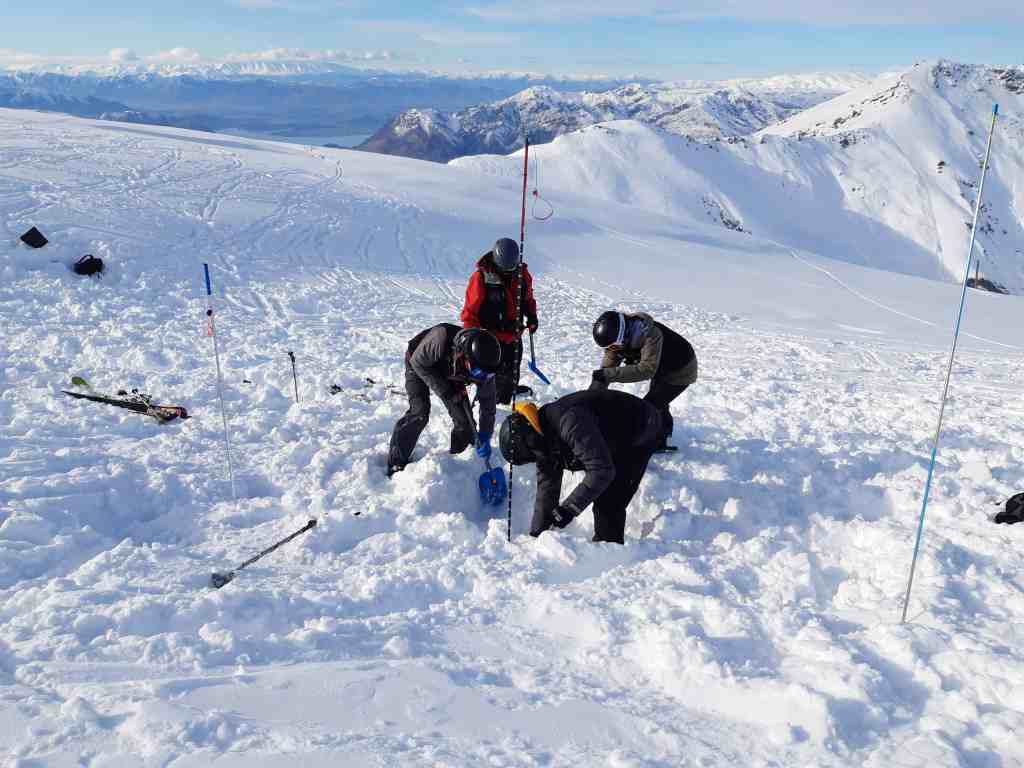
Avalanche training
The Mountain Safety Council findings reaffirm the immense value and positive behavioral impacts of having completed formal avalanche training. If you are a mountaineer looking to further your avalanche knowledge, seek out professionally run courses focused on mountaineering and delivered by mountain guides. You may have to travel to specific areas of the country for this. Foot-based courses mean slower travel and therefore participants will have to travel for longer durations to have the same opportunities to visit and experience different areas, terrain, and snowpacks. Climbers should therefore be prepared to spend longer gathering these experiences.
Conclusion
Mountaineers are exposed to avalanche hazards and have the potential for high consequential outcomes for a number of practical reasons. Mountaineers should seek to expand their understanding of avalanches with ongoing and professionally delivered avalanche education. They should develop good habits in forecasting and applying the forecast to their decision-making. Mountaineers will be routinely assessing and managing multiple hazards. This reiterates the importance of maintaining situational awareness and adjusting risk management, travel techniques, and use of equipment as required.